
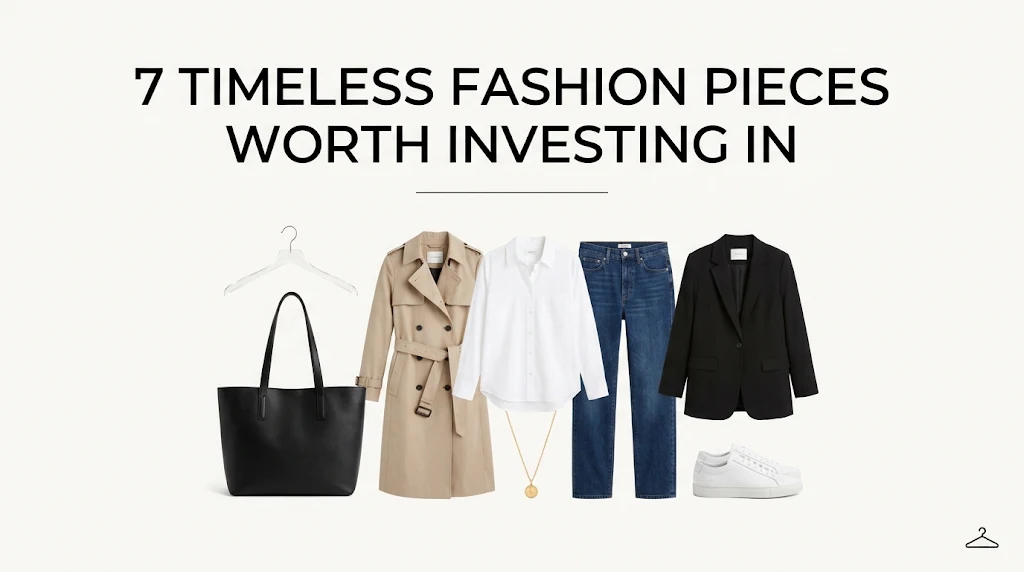
In an era dominated by micro-trends, rapid fashion cycles, and algorithm-driven aesthetic updates every few weeks, building a cohesive personal style can feel expensive and overwhelming. The modern fashion ecosystem encourages constant consumption, resulting in closets overflowing with garments that lose their appeal—and structural integrity—after a single season.
The alternative to this cycle is strategic wardrobe investment. Rather than purchasing dozens of low-quality trend pieces each year, fashion-forward women are returning to the principles of capsule dressing: acquiring high-quality, versatile items engineered to withstand changing aesthetics and repeated wear. Investing in classic garments lowers your long-term cost-per-wear (CPW), simplifies daily styling decisions, and ensures you present a polished, authoritative image in any setting.
This comprehensive guide breaks down the seven foundational wardrobe investments every woman should make, complete with buying criteria, styling frameworks, care instructions, and common purchasing mistakes to avoid.
1. The Tailored Blazer: Structure, Power, and Versatility
A expertly constructed blazer is the ultimate wardrobe anchor. Transcending business settings, the contemporary blazer balances structured tailoring with casual ease, instantly refining basic outfits like a plain white tee and denim.
What Makes It an Investment Piece
Unlike mass-market blazers made from synthetic blends that pill and lose structure at the shoulder, a true investment blazer utilizes natural fibers and internal canvas construction. Look for single-breasted or classic double-breasted silhouettes crafted from:
-
100% Wool Crepe or Fine Tropical Wool: Provides year-round breathability, natural crease resistance, and structure.
-
Structured Linen/Silk Blends: Ideal for warm climates, offering breathability without excessive wrinkling.
-
Viscose/Cupro Linings: Ensure comfortable layering over long sleeves without static or drag.
Key Takeaway: A blazer’s value lies in its shoulder architecture and canvas lining. Prioritize garments with fused or half-canvas construction that hold their shape through repeated professional dry cleanings.
How to Style It
-
Corporate Power: Pair a charcoal or navy blazer with matching tailored trousers, a silk camisole, and pointed-toe leather pumps.
-
Off-Duty Polish: Layer an oversized wool blazer over a crisp white T-shirt, straight-leg raw denim, and leather loafers.
-
Evening Sophistication: Drape the blazer over your shoulders across a slip dress to add structural contrast to fluid silk.
-
Pro Tip: Pay close attention to the shoulder seam. It should sit directly at your natural acromion bone (where your shoulder meets your arm). Sleeves can easily be tailored for length, but altering a blazer’s shoulder width is costly and often ruins its proportions.
2. The Trench Coat: The Ultimate Transitional Outerwear
Originally engineered for military utility, the trench coat has served as a cornerstone of female style for over a century. It offers weather resistance, functional coverage, and architectural lines that flatter every body shape.
       [ INNER LAYER ]          [ MID LAYER ]         [ OUTER SHIELD ]
    Silk Camisole / Tee   +   Cashmere Sweater   +   Double-Breasted Trench
Key Features of a Quality Trench
A true investment trench coat balances weather defense with timeless tailored details:
-
Gabardine Cotton: Invented by Thomas Burberry in 1879, high-density cotton gabardine is tightly woven to repel rain while remaining breathable.
-
Storm Flaps & Gun Patches: Functional double-layered panels across the back and shoulder that shed rainwater efficiently.
-
D-Ring Belt: Allows custom waist cinching to alter the garment’s silhouette from boxy to an A-line shape.
-
Horn or Corozo Buttons: Natural, durable buttons that won’t crack under stress like plastic alternatives.
Color Palette Strategy
While classic honey beige or khaki remains traditional, women with cool undertones or darker color preferences may find deep navy, olive, or slate black more compatible with their existing wardrobe palette.
Example: Matching a mid-thigh trench coat with tailored ankle trousers creates a balanced, elongated vertical line. Pairing a knee-length trench with a midi dress ensures your coat hem extends past or aligns cleanly with your dress hem, preventing awkward proportion breaks.
3. The Little Black Dress (LBD): Fluidity and Elegance
Since Coco Chanel popularized the concept in 1926, the Little Black Dress has served as the definitive baseline of evening and formal dressing. Its strength lies in its neutrality—acting as a canvas for elevated accessories, tailoring, and footwear.
Selecting Your Architectural Silhouette
The key to choosing an LBD with multi-decade longevity is avoiding hyper-specific design trends (such as extreme cut-outs, exaggerated puff sleeves, or micro-hem-lines). Instead, focus on timeless silhouettes:
| Silhouette Type | Best Body Alignment | Primary Styling Context | Recommended Fabric |
| Sheath / Column | Hourglass, Rectangle | Boardroom to Dinner | Heavy Silk Crepe, Wool Blend |
| A-Line / Fit-and-Flare | Pear, Apple, Petite | Daytime Events, Parties | Structured Mikado, Dense Knit |
| Bias-Cut Slip | All Body Types | Evening Gala, Casual Layering | 19–22 Momme Mulberry Silk |
Cost-Per-Wear (CPW) Analysis
Buying a high-grade silk or wool-blend LBD at $600 may seem expensive initially compared to a $60 fast-fashion alternative. However, consider the longevity metrics:
-
Fast-Fashion LBD: $60 ÷ 3 wears (loses shape/fades) = $20.00 per wear
-
Investment LBD: $600 ÷ 60 wears (over 5 years) = $10.00 per wear
-
Pro Tip: Choose a modest, flattering neckline (such as a bateau, soft square, or modest V-neck) that easily transitions from professional environments to evening events simply by changing your jewelry and shoes.
4. The White Button-Down Shirt: Clean Lines and Minimalism
A crisp white button-down shirt is one of the most versatile items a woman can own. Borrowed from menswear tailoring, it adds structure, brightness, and contrast to any outfit.
                     ┌── Crisp Poplin (Structured / Sharp)
                     │
WHITE BUTTON-DOWN ───┼── Heavy Silk Crepe (Fluid / Drapey)
                     │
                     └── Linen (Relaxed / Summer-Ready)
Fabric Selection Guide
The longevity and appearance of a white shirt depend heavily on weave type:
-
Cotton Poplin: Offers a sharp, crisp finish with high structural integrity. Best for corporate wear and architectural outfits.
-
Cotton Oxford: Tightly woven with a subtle texture. Durable and ideal for casual, preppy styling.
-
Silk Crepe de Chine: Offers a soft drape, natural luster, and fluid movement. Perfect for evening wear and soft tailoring.
Fit & Tailoring Rules
To maximize versatility, avoid skin-tight button-downs that pull across the bust. Select a relaxed fit or boy-fit cut that leaves space around the torso, enabling you to French-tuck, full-tuck, or tie the shirt waist without excess fabric bunching.
Maintenance Rule: Always launder white shirts with non-chlorine oxygen bleach alternatives to preserve brightness without weakening the organic cotton fibers. Hang dry on padded hangers to protect collar structural integrity.
5. High-Quality Leather Footwear: Loafers and Pumps
Footwear carries the physical weight of daily activity, making it the category where quality craftsmanship matters most. High-end leather footwear provides structural foot support, breathability, and repairability that synthetic shoes cannot match.
Construction Details That Matter
When evaluating investment footwear, look for traditional shoe-making techniques:
-
Blake Stitch or Goodyear Welt Construction: Stitched soles (rather than glued soles) allow a cobbler to resole the shoe repeatedly, extending its lifespan over decades.
-
Full-Grain Leather Uppers: The highest quality leather, which develops a rich patina over time and molds to the shape of your foot.
-
Leather Linings and Insoles: Allow foot moisture to evaporate naturally, preventing odor and blistering.
┌────────────────────────────────────────────────────────┐
│                   INVESTMENT FOOTWEAR                   │
├───────────────────────────┬────────────────────────────┤
│     Classic Leather Loafer │     Pointed-Toe Leather Pump│
│  - Horsebit or Penny detail│  - 75mm to 85mm heel height│
│  - Stacked leather heel   │  - Deep vamp cut           │
│  - Daytime & Travel       │  - Business & Evening      │
└───────────────────────────┴────────────────────────────┘
The Two Essential Styles
-
The Classic Leather Loafer: A flat or low-stacked heel option in black, cognac, or burgundy. Perfect for long walks, office wear, and elevated weekend outfits.
-
The Pointed-Toe Leather Pump: A 75mm to 85mm (3-inch) heel in black or skin-tone neutral. Pointed toes visually elongate the leg, while a mid-height heel provides balance between comfort and posture.
-
Pro Tip: Take new leather shoes to a cobbler before your first wear to install thin rubber protective soles (Topy soles). This shields the delicate leather underside from moisture and abrasion, doubling the life of the shoe.
6. The Real Cashmere Sweater: Softness and Thermal Efficiency
A genuine 100% cashmere sweater offers lightweight warmth without bulk. Derived from the soft undercoat of cashmere goats, high-grade cashmere is eight times more insulating than sheep’s wool while remaining lightweight against the skin.
Navigating Cashmere Quality: Grade A vs. Low-Grade
Not all cashmere is created equal. The influx of cheap “cashmere” in retail stores has diluted consumer expectations. Use this criteria to evaluate true investment cashmere:
-
Fiber Length & Diameter: Grade A cashmere utilizes fibers that are long (at least 34–36mm) and fine (under 15.5 microns). This prevents short fibers from working loose and forming pills.
-
Ply Count: Opt for 2-ply or 3-ply knits. Single-ply cashmere is fragile, prone to developing holes, and wears out quickly at friction points (elbows, underarms).
-
Tension Test: Gently stretch a section of the knit and release it. High-quality cashmere immediately snaps back to its original shape without leaving distortion.
Key Takeaway: Avoid cashmere garments that feel overly fuzzy or powdery off the rack. Manufacturers often use short, lower-grade fibers treated with chemical softeners to create initial softness, leading to severe pilling after just a few wears. High-grade cashmere starts slightly firm and softens naturally over time.
7. The Structured Leather Handbag: Architecture and Utility
A leather handbag is often the most visible accessory in an ensemble. A well-designed, structured handbag grounds fluid garments, organizes daily essentials, and unifies disparate outfit elements.
Selecting an Architectural Profile
For a handbag to remain stylish across changing trend cycles, choose a clean geometric shape—such as a structured tote, top-handle bag, or clean satchel—with minimal branding.
       [ MINIMAL HARDWARE ]         ---> Keeps aesthetics timeless across decades
       [ STRUCTURED BASE ]          ---> Prevents bottom sagging when fully loaded
       [ REINFORCED STITCHING ]     ---> Protects strap attachment stress points
Critical Quality Indicators
-
Edge Painting: Clean, hand-applied edge dye along leather cuts prevents moisture infiltration and fraying.
-
Hardware Materials: Solid brass or palladium-plated hardware resists scratching, tarnishing, and flaking compared to hollow electroplated plastic.
-
Interior Lining: Heavy-duty suede, canvas, or smooth leather linings endure key contact, cosmetics, and pen points far better than thin polyester linings.
Strategic Purchasing: The Capsule Investment Framework
Building an investment-grade wardrobe requires financial planning and disciplined curation. Use this step-by-step framework to transition your closet from trend-driven to timeless.
┌─────────────────────────────────────────────────────────┐
│              WARDROBE AUDIT & REPAIR STEP              │
└────────────────────────────┬────────────────────────────┘
                             │
                             ▼
┌─────────────────────────────────────────────────────────┐
│                 GAP & COST PER WEAR ANALYSIS            │
└────────────────────────────┬────────────────────────────┘
                             │
                             ▼
┌─────────────────────────────────────────────────────────┐
│              HIGH-FIBER QUALITY INSPECTION              │
└────────────────────────────┬────────────────────────────┘
                             │
                             ▼
┌─────────────────────────────────────────────────────────┐
│            POST-PURCHASE PRESERVATION & CARE            │
└─────────────────────────────────────────────────────────┘
Phase 1: The Wardrobe Audit
Remove every item from your current closet and sort them by usage frequency over the past 12 months. Identify holes in your baseline dressing where high-quality core items would replace multiple failing trend items.
Phase 2: Establish Your Neutral Color Palette
To ensure maximum versatility, keep 70% of your core investment pieces within a cohesive neutral foundation:
-
Primary Neutrals: Black, Navy, Charcoal, Chocolate Brown.
-
Secondary Neutrals: Cream, Soft Camel, Olive, Warm Taupe.
-
Accent Colors: Integrated via silk scarves, knitwear, or lipstick.
Phase 3: The Pre-Purchase Quality Checklist
Before purchasing any garment, verify these five construction checks:
-
Fiber Composition Label: Is the garment made of at least 80–100% natural fibers?
-
Seam Allowance: Are internal seams finished cleanly (e.g., French seams, bound edges) with extra fabric for future tailoring?
-
Pattern Alignment: Do stripes, checks, or textures line up at side seams and shoulder joins?
-
Spare Hardware: Does the item come with extra buttons or thread skeins?
-
Comfort and Range of Motion: Can you comfortably sit, extend your arms, and walk without tension pull lines forming across the fabric?
Common Wardrobe Investment Mistakes to Avoid
Even discerning buyers can make costly mistakes when building a curated wardrobe. Here are the top four pitfalls to avoid:
1. Equating Price Tag with Quality
A luxury price tag does not guarantee superior materials or ethical craftsmanship. Many fashion houses monetize brand recognition while using synthetic fabrics and cheap construction. Always inspect fabric content and construction details rather than relying on the brand label alone.
2. Buying for a Future Body or Lifestyle
Never buy an investment garment for a weight you plan to reach or a lifestyle you do not currently live. Invest in pieces that fit your current body and support your day-to-day routine today.
3. Neglecting Garment Maintenance
The lifespan of a high-quality item depends on proper care. Failing to use wooden hangers, ignoring sweater shaving, using harsh detergents, or machine-washing delicate fibers will shorten the lifespan of even the finest garments.
4. Over-Indexing on Statement Details
Distinctive details like contrast piping, oversized studs, or bold prints may look striking on a hanger, but they limit how often you can re-wear an item without it feeling repetitive. Stick to clean, unadorned foundations for your core seven items.
Preserving Your Investment: Care & Maintenance Protocols
To ensure your investment pieces last for decades, establish a structured maintenance routine:
-
Wool & Cashmere Care:
-
Depill regularly using a cedar sweater comb or fabric shaver.
-
Store folded with cedar blocks or lavender sachets—never hang knits, as this stretches out shoulder seams.
-
-
Leather Preservation:
-
Apply a high-grade leather conditioner every 6 months to maintain moisture and prevent surface cracking.
-
Stuff handbags with acid-free tissue paper when not in use to preserve their internal structure.
-
-
Tailored Garment Care:
-
Brush tailored wool blazers and coats with a natural bristle garment brush after each wear to remove dust and lift soil.
-
Limit dry cleaning to 1–2 times per season; spot-clean and steam garments between wears to preserve fiber elasticity.
-
Frequently Asked Questions
What is the single best piece to start with if I am on a limited budget?
Start with a tailored wool-blend blazer in neutral black or navy. A well-fitted blazer instantly upgrades affordable basics like simple t-shirts, basic knitwear, and denim, giving your existing closet an immediate boost in structure and polish.
How do I know if an item fits correctly if I plan to tailor it?
Always fit the largest part of your body first. Tailors can easily take in waistlines, hem trouser legs, and shorten sleeves. However, enlarging tight shoulders, necklines, or narrow hip seams is often impossible due to fabric limitations.
Are synthetic blends ever acceptable in investment garments?
Yes, in small, functional amounts. Adding 2% to 5% elastane (spandex) to wool trousers or blazers provides comfortable stretch and shape retention. Similarly, a small percentage of nylon blended into socks or knits improves durability at high-friction points. Avoid items where synthetics make up more than 30% of the fiber blend.
How can I verify that cashmere or wool is ethically sourced?
Look for independent certifications such as the Good Cashmere Standard (GCS), the Responsible Wool Standard (RWS), or OEKO-TEX Standard 100. These certifications ensure animal welfare, sustainable land management, and safe working conditions throughout the supply chain.
