
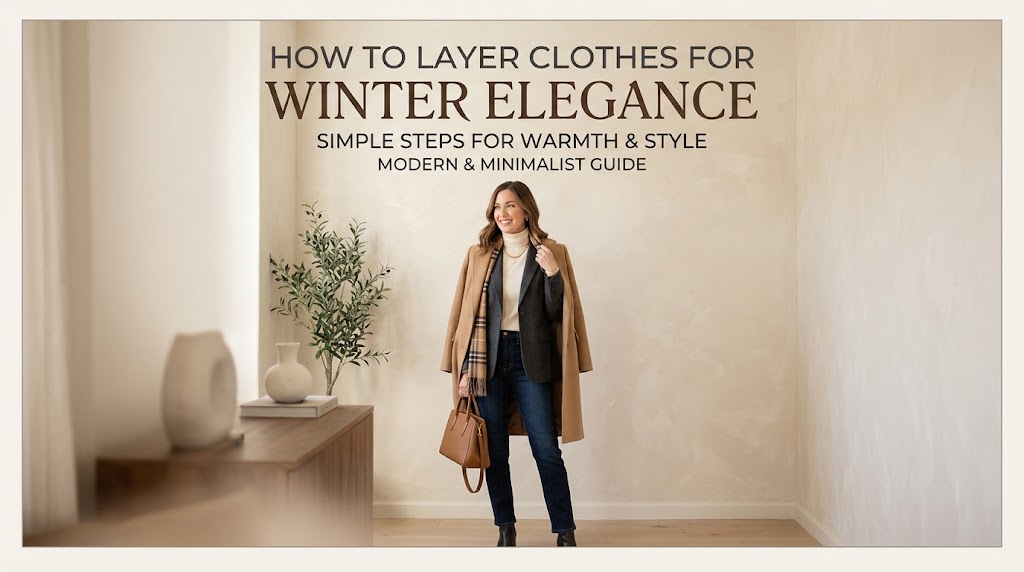
When temperatures drop, standard sartorial instincts often default to heavy, bulky outerwear that obscures personal style in favor of pure utility. The classic winter dilemma pits warmth against aesthetics: bundling up in voluminous down coats and oversized knitwear frequently results in a shapeless silhouette, while dressing sleekly leaves you vulnerable to harsh seasonal winds.
Achieving true winter elegance requires shifting your perspective from merely stacking clothes to mastering a refined system of visual balance, fabric synergy, and thermal efficiency. Layering is not just a pragmatic defense against the cold—it is an art form that allows for intricate texture contrasts, sophisticated color storytelling, and versatile outfits that transition seamlessly from frozen morning commutes to heated indoor spaces.
In this definitive guide to cold-weather styling, you will discover the foundational three-layer framework redefined through a luxury lens, learn how to manage fabric weights without adding bulk, and master the secret techniques top stylists use to create dynamic, polished winter ensembles.
The Fundamentals of Thermal Sophistication: The Three-Layer System Redefined
At its core, functional winter layering relies on a classic three-part formula: the base layer, the insulating layer, and the protective outer shell. However, transforming this outdoor-survival framework into high-fashion daily wear requires selecting elevated materials and precise tailoring.
[ Base Layer: Moisture Control & Body Hug ]
                   │
                   ▼
[ Mid Layer: Insulation & Texture Contrast ]
                   │
                   ▼
[ Outer Layer: Structure, Proportion & Defense ]
1. The Second-Skin Base Layer
The foundation of any streamlined winter look is a sleek, form-fitting base layer. The goal here is thermal regulation without architectural volume.
-
Optimal Fabrics: Pure Mulberry silk, ultra-fine Merino wool (under 17.5 microns), or high-gauge Modal blends.
-
Key Silhouette: Seamless long-sleeve crewnecks, high-neck bodysuits, or paper-thin turtleneck tops.
-
Styling Function: Keeps cold air out while providing a smooth canvas for secondary garments to glide over smoothly without bunching.
Pro Tip: Avoid cotton tees as base layers during winter. Cotton absorbs bodily moisture and holds cold air close to the skin, causing chills and adding unnecessary bulk beneath mid-layers.
2. The Architectural Mid-Layer
Your mid-layer is where true insulation happens, but visually, it introduces character, structure, and depth to your ensemble.
-
Optimal Fabrics: Heavyweight cashmere, brushed alpaca, ribbed knits, structured tweed, or fine suede.
-
Key Silhouette: Tailored sweater vests, double-breasted blazers, relaxed cashmere crewnecks, or button-down silk blouses worn beneath knitwear.
-
Styling Function: Traps warmth while acting as the focal point when you remove your outer coat indoors.
3. The Grand Outer Layer
The outermost garment is your statement piece—it sets the tone for your entire visual presence before anything underneath is revealed.
-
Optimal Fabrics: Double-faced wool, cashmere-blend tailored coats, heavyweight shearling, or structured trench coats with removable thermal linings.
-
Key Silhouette: Belted robe coats, floor-sweeping tailored car coats, or structured cape jackets.
-
Styling Function: Shields against wind and precipitation while anchor-framing the underlying visual layers.
Fabric Chemistry: Pairing Textures for Visual Depth
Elegance in cold-weather dressing rarely relies on bright patterns; instead, it draws intrigue from tactile contrast. Combining varying textile weights and sheens prevents monochrome or neutral outfits from appearing flat or heavy.
| Layer Position | Recommended Fabric | Texture Profile | Visual Effect |
| Inner Base | Mulberry Silk / Modal | Smooth, Luminous, Fluid | Subtle sheen at collar and cuffs |
| Middle Layer | Chunky Cashmere / Alpaca | Soft, Matte, Voluminous | Rich tactile warmth |
| Structured Accent | Supple Leather / Suede | Slick, Dense, Firm | Sharp contrast to soft knits |
| Outer Shell | Double-Faced Wool | Heavy, Tailored, Matte | Clean geometric lines |
Master the High-Low Texture Pairings
To elevate a winter outfit instantly, mix opposite textural elements within the same color palette:
-
Chunky vs. Fluid: Pair a heavy cable-knit cashmere sweater with a bias-cut satin slip skirt. Add opaque thermal tights underneath and tall leather boots to anchor the softness.
-
Matte vs. Gloss: Layer a matte fine-gauge turtleneck beneath a sharp leather blazer, topped with a fluid wool-blend coat.
-
Rough vs. Soft: Combine structured tweed or houndstooth tailored trousers with a ultra-soft brushed mohair cardigan.
+-------------------------------------------------------------------+
|                       THE TEXTURE EQUATION                        |
|                                                                   |
|   [ Smooth Silk ]  +  [ Fluffy Cashmere ]  +  [ Structured Leather ]|
|                                                                   |
|              = Effortless Cold-Weather Dimensions                 |
+-------------------------------------------------------------------+
Key Takeaway: Always vary the sheen and surface weight of your pieces. If your sweater, pants, and coat all feature the exact same flat wool texture, your frame will appear heavy and visually monolithic.
Mastering Proportion and Silhouette Control
The primary reason winter layering feels unapproachable to many is the fear of losing body definition. By managing hem lengths, waistlines, and volume distribution, you can wear multiple layers while retaining a sharp, graceful shape.
The Rule of Alternating Volumes
Never stack multiple oversized garments directly on top of one another. Instead, alternate between fitted and fluid silhouettes as you move outward.
-
Slim Base + Relaxed Mid + Tailored Outer: Wear a fitted thermal turtleneck under a relaxed-fit button-down shirt, topped with a sharp, structured double-breasted wool coat.
-
Fitted Top + Voluminous Bottom + Belted Top Layer: Pair a close-fitting ribbed knit sweater with wide-leg wool trousers, wrapped together using a belted trench or wrap coat to define the natural waist.
Correct Volume Distribution:
[ Slim Base ] -> [ Relaxed Mid ] -> [ Tailored Outer Coat ]  --> Crisp & Balanced

Incorrect Volume Distribution:
[ Oversized Hoodie ] -> [ Chunky Cardigan ] -> [ Puffer Jacket ] --> Shapeless & Heavy
Strategic Hemline Staggering
Exposing subtle glimpses of underlying layers creates intentionality. Stagger your hemlines so each piece earns its place in the outfit:
-
The Collar & Cuff Peek: Let 1 to 2 inches of a crisp white silk shirt cuff extend past the sleeves of your cashmere sweater. Allow the shirt collar to pop out cleanly over a round neckline.
-
The Layered Hem: Position a longline silk blouse so its hem falls 2 to 3 inches below a cropped boxy knit sweater, framing the hips before transitioning into tailored trousers.
Color Palettes: Constructing High-End Winter Looks
Color management is critical when layering multiple garments. Chaotic color choices make complex layers feel cluttered, whereas a disciplined palette projects quiet luxury and deliberate curation.
1. Monochromatic Nuance (The Tonal Approach)
Dressing in varying shades of a single color family creates a seamless vertical line that elongates the frame.
-
The Warm Camel Palette: Pair an ivory silk base top with an oat-colored cashmere sweater, camel wide-leg trousers, and a deep cognac wool coat.
-
The Charcoal Elevation: Combine a slate-grey turtleneck with a heather-grey tweed blazer, dark charcoal trousers, and a jet-black tailored coat.
Lightest (Inner)  ------->  Medium (Middle)  ------->  Darkest (Outer)
  [ Ivory Silk ]        [ Oat Cashmere ]         [ Camel Wool Coat ]
2. The Accent Anchor Formula
Use a rich, autumnal or deep jewel tone to break up neutral base layers.
-
Maintain neutrals (cream, grey, black, camel) across 80% of the look.
-
Introduce a deep accent tone—such as forest green, rich burgundy, burnt terracotta, or midnight navy—in your mid-layer sweater, scarf, or leather accessories.
Example Styling Scenario:
Imagine an all-black foundation: black merino turtleneck, black tailored wool trousers, and black leather riding boots. Elevate this instantly by adding a rich forest-green double-breasted blazer as a mid-layer and draping a soft cream wool coat over the shoulders. The contrast creates immediate visual interest without sacrificing sophistication.
Essential Cold-Weather Accessories That Elevate Your Look
Accessories during winter should never be an afterthought. High-quality accessories serve both functional insulation needs and act as the finishing polish for layered ensembles.
1. Luxurious Scarves: Weight and Drape
Choose scarves made of pure cashmere, fine wool, or silk-wool blends. Avoid synthetic fabric scarves that pill easily and create static electricity around hair and knitwear.
-
The French Tuck Drape: Fold a long cashmere scarf in half, wrap it around your neck, and pull the open ends through the loop. Tuck the ends neatly inside your closed coat for clean, wind-proof lines.
-
The Belted Drape: Hang an unknotted long wool scarf flat over your shoulders and secure it around your waist using a slim leather belt over your mid-layer.
2. Gloves and Footwear: Anchoring the Silhouette
Leather and suede gloves add instant elegance, especially when lined with cashmere or silk for thermal protection.
-
Sleeve Coordination: Match your glove length to your coat sleeve. If your coat features bracelet-length or quarter sleeves, opt for opera-length leather gloves to cover exposed skin gracefully.
-
Refined Footwear: Swap heavy lug-sole boots for sleek leather knee-high boots with an almond or subtle square toe. Ensure trousers fall smoothly over boot shafts without bunching.
Common Winter Layering Pitfalls to Avoid
Even with luxury garments, small styling mistakes can disrupt the harmony of a cold-weather outfit. Here is how to navigate common pitfalls:
1. Fabric Friction and Bunching
-
The Mistake: Layering heavy wool directly over raw cotton or coarse knits causes fabrics to catch, pull, and twist awkwardly across your shoulders and arms.
-
The Solution: Ensure your mid-layers have smooth inner linings (such as cupro or silk), or wear ultra-smooth silk baselayers so upper garments glide effortlessly over your movement.
2. Ignoring Indoor Temperature Shifts
-
The Mistake: Dressing solely for cold outdoor transit, leaving you overheated and uncomfortable once entering aggressively heated indoor environments.
-
The Solution: Build your outfit with standalone integrity. Every layer should look complete and intentionally styled on its own if you remove your coat or blazer.
3. Neglecting Hardware & Metals
-
The Mistake: Mixing clashing metallic finishes—such as bright silver jacket zippers, antique brass belt buckles, and gold handbag chains—creating visual noise across multiple layers.
-
The Solution: Harmonize metal hardware across your belt, coat closures, jewelry, and handbag accents to maintain a sleek, cohesive finish.
Frequently Asked Questions (FAQ)
How do I layer warmly for winter without looking bulky?
Focus on high-performance natural fibers like extra-fine Merino wool, silk, and high-density cashmere. These fabrics trap body heat efficiently in thin gauges, eliminating the need for thick, heavy synthetics. Always maintain silhouette definition by keeping your innermost layer fitted and using belts or tailored hemlines on your outer layers.
What is the best base layer fabric for sensitive skin?
Pure Mulberry silk or fine-gauge Modal blends are ideal for sensitive skin. They are naturally hypoallergenic, extremely smooth against the body, and highly effective at regulating temperature without the itchiness sometimes associated with coarser wools.
Can I layer a blazer under a coat without restricting shoulder movement?
Yes. To layer a blazer under an overcoat seamlessly, select an unconstructed blazer (minimal shoulder padding) in a fluid fabric like soft wool or flannel. Ensure your outer coat features a dropped shoulder or raglan sleeve design with a generous armhole cut.
How do I style wide-leg trousers for winter without dragging them in snow or rain?
Opt for cropped wide-leg trousers that end 1–2 inches above the ankle, paired with fitted leather ankle or knee-high boots that extend up beneath the pants hem. Alternatively, choose full-length trousers crafted from water-repellent, heavy-weight wool crepe and pair them with stacked-heel boots to keep the hem off damp surfaces.
Elevate Your Winter Wardrobe with Intentional Layering
Winter dressing does not require sacrificing personal style for physical comfort. By mastering the fundamental three-layer framework, experimenting with rich textural contrasts, and maintaining clear proportion control, cold-weather wardrobe choices transform from a functional necessity into an effortless expression of chic elegance.
Begin by assessing your closet foundations today: invest in high-quality silk and merino base layers, curate a versatile neutral color palette, and pair your outerwear with clean, structured silhouettes. Step into the cold season with confidence, warmth, and timeless polish.
