
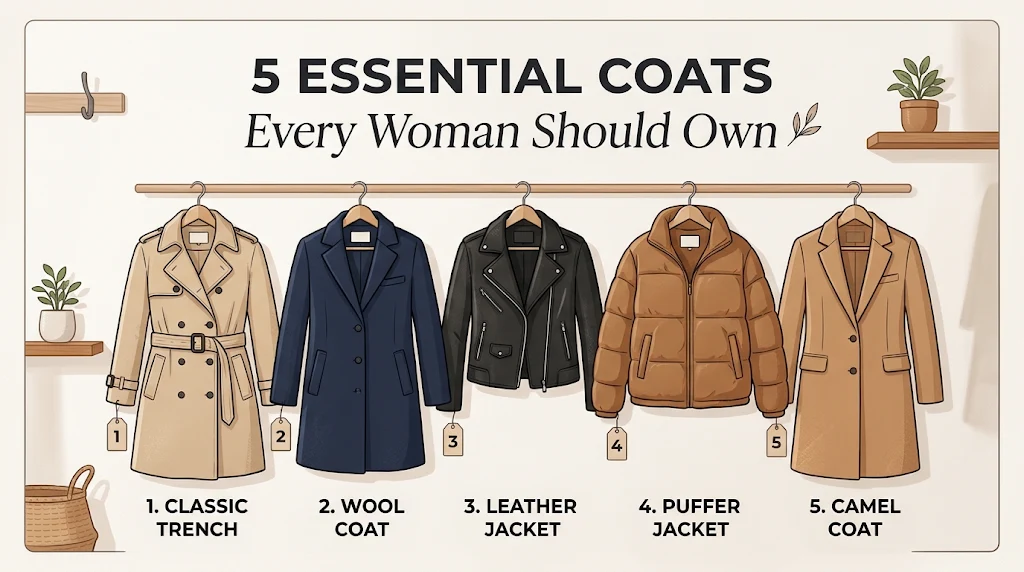
Outerwear is the single most visible component of your cold-weather wardrobe. When temperatures drop, your coat stops being an accessory and becomes your entire outfit. It is the first impression you make when entering a room and the final layer that protects you from the elements.
Yet, many women find themselves trapped in one of two extremes: a closet overflowing with impulse-bought jackets that lack versatility, or a single worn-out coat expected to perform for casual weekend runs, formal evening galas, and rainy commute days alike.
Building a functional, elevated wardrobe does not require dozens of outerwear options. It requires a strategic selection of classic silhouettes designed to cover every dress code, weather condition, and seasonal transition. By investing in five foundational coats, you can simplify morning dressing, elevate your personal style, and ensure you are impeccably turned out for any occasion.
Here is your comprehensive guide to the five essential coats every woman should own, complete with buying frameworks, fabric selection rules, styling strategies, and care maintenance.
1. The Tailored Wool Trench or Tailored Overcoat: The Executive Powerhouse
                ┌──────────────────────────────────────────┐
                │        THE TAILORED OVERCOAT             │
                ├──────────────────────────────────────────┤
                │ Ideal Temp: 25°F - 50°F (-4°C to 10°C)   │
                │ Primary Fabrics: Wool, Cashmere, Meltons │
                │ Versatility Index: 9.5 / 10              │
                └──────────────────────────────────────────┘
The tailored wool overcoat—often structured with clean lines, a single or double-breasted closure, and sharp shoulders—is the backbone of polished cold-weather style. It bridges the gap between formal business attire and elevated off-duty looks.
Key Silhouette & Construction Details
-
Length: Mid-calf (midi) to knee-length offers maximum versatility and insulation.
-
Shoulder Seams: Sharp, structured shoulders define the frame. Ensure the shoulder seam sits precisely at your anatomical shoulder point to allow light layering underneath.
-
Fabric Composition: Look for 100% virgin wool, wool-cashmere blends, or heavy wool melton. Avoid synthetic blends higher than 20%, as acrylic and polyester reduce thermal efficiency and are prone to unsightly pilling.
-
Lapels: A classic notch lapel offers timeless subtlety, while a peak lapels adds vertical lines and authority.
How to Style It Across Occasions
-
Corporate / Formal: Layer a camel or navy wool overcoat over a tailored suit, sheath dress, or silk blouse with trousers. Pair with pointed-toe leather ankle boots or classic pumps.
-
Casual Chic: Drape the coat over a relaxed grey hoodie, straight-leg denim, and clean white leather sneakers. The contrast between structured outerwear and casual loungewear creates an effortlessly chic aesthetic.
Key Takeaway: A structured wool overcoat immediately elevates basic garments beneath it. Opt for neutral tones—such as camel, charcoal, black, or navy—to ensure seamless pairing with your existing wardrobe.
Pro Tip: Testing the Layering Fit
When trying on a structured wool coat, wear a chunky knit sweater to the fitting. Fasten all buttons or snaps and extend your arms forward. If the fabric pulls tightly across your upper back or shoulder blades, size up. You need structural room for layering without distorting the coat’s silhouette.
2. The Classic Double-Breasted Trench Coat: The Rainy Transition Staple
                ┌──────────────────────────────────────────┐
                │        THE CLASSIC TRENCH COAT           │
                ├──────────────────────────────────────────┤
                │ Ideal Temp: 50°F - 68°F (10°C to 20°C)  │
                │ Primary Fabrics: Cotton Gabardine, Twill │
                │ Versatility Index: 10 / 10               │
                └──────────────────────────────────────────┘
Originally engineered for military officers in World War I, the trench coat has transcended its utilitarian roots to become an enduring symbol of sophistication. It is the ultimate transitional layer for spring and autumn, defending against rain and wind while maintaining an elegant drape.
Anatomical Features of a Masterpiece Trench
To ensure you are buying a true, high-performance trench coat, look for these heritage construction markers:
-
Storm Flap (Gun Flap): An extra layer of fabric across the chest that keeps rain from penetrating the seam.
-
Epaulettes: Buttoned shoulder straps originally designed to anchor military accoutrements, which add structure to narrow shoulders.
-
D-Ring Belt: Allows you to cinched the waist securely, creating an hourglass shape regardless of underlayers.
-
Back Vent & Rain Shield: A flap across the upper back that directs rainwater off the coat rather than soaking through the back panel.
Selecting the Right Hue and Fabric
-
Gabardine Cotton: Invented by Thomas Burberry, tightly woven cotton gabardine is water-resistant, breathable, and durable.
-
Color Palette: Honey beige, stone, khaki, and deep navy are the standard benchmark shades. If you have cool skin undertones, choose stone or navy; if you have warm undertones, lean toward honey or classic beige.
       [ Warm Undertones ]               [ Cool Undertones ]
   ┌────────────────────────┐        ┌────────────────────────┐
   │ Honey • Warm Beige     │        │ Stone • Slate • Navy   │
   │ Cognac • Camel         │        │ Charcoal • Black       │
   └────────────────────────┘        └────────────────────────┘
Example Scenario: Weathering Uncertain Spring Days
You have back-to-back client meetings followed by an outdoor dinner in mild, rainy weather.
-
The Outfit: Wear tailored ankle trousers, a light silk knit top, and waterproof leather loafers.
-
The Coat Styling: Wrap your trench coat around you, leaving it unbuttoned but tying the belt in a loose knot at the waist (rather than using the buckle). Tie the belt back behind your waist on clear days to create a streamlined, open front.
3. The Insulated Puffer Coat: The Sub-Zero Shield
                ┌──────────────────────────────────────────┐
                │          THE INSULATED PUFFER            │
                ├──────────────────────────────────────────┤
                │ Ideal Temp: Below 32°F (Sub-0°C)         │
                │ Primary Fabrics: Down, Technical Nylon   │
                │ Versatility Index: 8.5 / 10              │
                └──────────────────────────────────────────┘
When freezing temperatures arrive, aesthetic styling must marry functional warmth. The modern insulated puffer has evolved from bulky outerwear into a sleek design piece. It is essential for sub-zero commutes, winter travel, and outdoor activities.
Thermal Performance Framework: Down vs. Synthetic
| Feature | Goose / Duck Down | Premium Synthetic (PrimaLoft/Thinsulate) |
| Warmth-to-Weight Ratio | Exceptional; lightweight yet extremely warm | Good; slightly heavier to match down warmth |
| Wet Weather Performance | Poor (loses loft and warmth when wet unless treated) | Excellent (retains insulation when wet) |
| Compressibility | High (packs down easily for travel) | Moderate |
| Durability | Decades with proper care | 5–8 years before synthetic fibers compress |
Key Design Specs to Look For
-
Fill Power: For true winter cold, select a down coat rated at 600 to 800 fill power.
-
Length: Look for mid-thigh to knee-length options to protect your upper legs from biting winds.
-
Baffle Orientation: Chevron, diagonal, or graduated baffle stitching prevents down from shifting while visually slimming the torso.
-
Enclosure System: Ensure the coat features a two-way zipper protected by a snap-closure storm flap to lock out cold drafts.
Key Takeaway: Treat your winter puffer as technical equipment. Prioritize weather-resistant shell fabrics (such as DWR-coated nylon), fleece-lined pockets, and an adjustable hood.
4. The Statement Wool Wrap Coat: The Elegant Showstopper
                ┌──────────────────────────────────────────┐
                │        THE STATEMENT WRAP COAT           │
                ├──────────────────────────────────────────┤
                │ Ideal Temp: 35°F - 55°F (2°C to 13°C)    │
                │ Primary Fabrics: Alpaca, Cashmere, Wool  │
                │ Versatility Index: 9.0 / 10              │
                └──────────────────────────────────────────┘
If the tailored overcoat represents precision and authority, the wool wrap coat represents relaxed luxury. Lacking rigid button closures, this silhouette relies on fluid fabric draping and a waist tie. It effortlessly glides over evening wear, bulky knits, and cocktail attire.
Selecting Luxurious Fabrics
Because the beauty of a wrap coat lies in its motion and drape, fabric quality is paramount:
-
Cashmere Blends: Offer an impossibly soft feel and high thermal retention with lightweight bulk.
-
Alpaca Wool: Naturally water-repellent, exceptionally warm, and features a subtle lustrous sheen.
-
Double-Faced Wool: A construction technique where two layers of fine wool are woven together, eliminating the need for a heavy lining. This creates a lightweight coat that wraps smoothly around the body.
                  [ Heavy Structure ]  ◄──►  [ Fluid Motion ]
                        Tailored Overcoat    Wrap Coat
                        Set Shoulders        Dropped Shoulders
                        Button Closure       Self-Tie Belt
Color Strategies for the Statement Layer
While classic neutrals are always safe, the wrap coat is an excellent place to introduce subtle statement shades into your outerwear rotation:
-
Rich Earth Tones: Chocolate brown, terracotta, or warm olive.
-
Jewel Tones: Deep emerald green, rich burgundy (oxblood), or midnight navy.
-
Monochromatic Styling: Pair an cream wrap coat with an ivory cashmere turtleneck and ecru trousers for a refined, tonal ensemble.
5. The Casual Leather Moto or Sheling Jacket: The Edge Component
                ┌──────────────────────────────────────────┐
                │       LEATHER MOTO / SHEARLING           │
                ├──────────────────────────────────────────┤
                │ Ideal Temp: 45°F - 65°F (7°C to 18°C)    │
                │ Primary Fabrics: Full-Grain Leather, Faux│
                │ Versatility Index: 8.8 / 10              │
                └──────────────────────────────────────────┘
Every well-rounded wardrobe requires a short, textured coat option for casual outings, evening dinners, and warm seasonal transitions. A premium leather jacket or a cropped shearling coat provides structural contrast to soft knits, denim, and feminine dresses.
Material Selection: Real vs. Faux
-
Full-Grain Leather: Matures over time, developing a rich patina. It conforms to your body shape after repeated wears and lasts for decades.
-
Shearling (Suede Outer / Wool Inner): Provides substantial insulation in cold weather while introducing rich tactile texture to your outfits.
-
High-Grade Vegan Alternatives: Ensure synthetic leather utilizes polyurethane (PU) rather than cheap PVC to avoid a plastic shine and premature peeling.
Styling the Proportional Contrast
Short jackets stop at or just below the hip bone, making them ideal for manipulating body proportions:
  [ Short Jacket Length ]   ────► Accentuates natural waist line
  [ High-Waisted Bottoms ] ────► Visually lengthens the legs
-
The Casual Uniform: Pair a black leather moto jacket with a white t-shirt, high-waisted straight-leg jeans, and ankle boots.
-
The Textural Juxtaposition: Layer a cropped shearling jacket over a mid-length slip dress and knee-high leather boots. The contrast between rough suede/wool and smooth silk creates an intriguing, balanced look.
Outerwear Care and Maintenance Protocol
Investing in high-quality coats requires proper care to preserve fabric integrity, structure, and water resistance over time.
       SEASONAL CARE TIMELINE

       ┌────────────────────────┐
       │   Early Spring (End)   │ ──► Dry clean, repair seams, store in garment bags
       └────────────────────────┘
                   │
       ┌────────────────────────┐
       │   Mid-Autumn (Start)   │ ──► Steam, brush wool, re-apply water repellent
       └────────────────────────┘
1. Wool & Cashmere Maintenance
-
Brushing: After wearing, brush wool coats with a natural boar-bristle garment brush from top to bottom. This removes trapped dust, restores the nap, and prevents fabric pilling.
-
Resting: Never wear the same wool coat consecutive days. Allow it to rest on a contoured wooden hanger for 24 hours to let the natural fibers spring back.
-
Off-Season Storage: Clean your coat before seasonal storage. Moths are attracted to body oils and food residues, not the wool itself. Store in breathable canvas garment bags—never plastic.
2. Down & Synthetic Puffer Maintenance
-
Washing: Wash technical puffers in a front-loading machine using a specialized down detergent.
-
Drying: Tumble dry on low heat with 3–4 clean tennis balls or wool dryer balls. This breaks up damp down clusters and fully restores fill loft.
3. Leather & Shearling Care
-
Conditioning: Apply a specialized leather conditioner once a year to prevent drying and cracking.
-
Moisture Management: If your leather coat gets soaked in rain, let it air dry away from direct heat sources (radiators, hair dryers) on a padded hanger.
3 Common Outerwear Pitfalls to Avoid
1. Buying the Wrong Size Due to Thin Underlayers
Many women shop for coats while wearing thin T-shirts or silk blouses. Consequently, they purchase a size too small, making the coat feel tight and restrictive when worn over winter knits.
-
Solution: Always shop for coats with a mid-weight sweater on, or intentionally size up if the brand runs slim.
2. Ignoring Hardware and Trimmings Quality
A coat may feature high-quality wool, but cheap plastic buttons, flimsy zippers, or bright, brassy hardware can cheapen its appearance.
-
Solution: Inspect zippers for smooth operation (preferably YKK or Raccagni metal zippers). Ensure buttons are securely cross-stitched and made of natural horn, mother-of-pearl, or sturdy matte metal.
3. Compromising on Hemline Proportions
Wearing a mid-length coat that ends directly at the widest part of your calf or sitting awkwardly an inch above a midi dress hem creates visual friction.
-
Solution: Aim for your tailored wool coats and trench coats to extend 2 to 3 inches below your midi skirts and dresses, or opt for a clearly cropped jacket.
Frequently Asked Questions
What color coat should I buy first if I am starting from scratch?
If you are building a wardrobe from scratch, your first coat should be a tailored wool overcoat in neutral camel, charcoal grey, or black. Camel provides warmth and pairs exceptionally well with blue denim, cream knits, and black boots. Charcoal and black offer formal versatility for business and evening wear.
How much should I spend on a high-quality coat?
outer garments undergo significant wear and environmental exposure. Allocate a higher portion of your fashion budget to outerwear than to basic tops or trendy pieces. Look for investment pieces made from high-grade materials (100% wool, high fill-power down, or full-grain leather) during end-of-season sales to maximize value.
Can I wear a puffer coat over formal evening wear?
While modern puffer coats are elevated, pairing a sport-focused puffer over a formal evening gown or tuxedo creates a stylistic mismatch. Choose a wool wrap coat or an oversized tailored overcoat for formal events; these silhouettes easily slide over formal attire while maintaining an elegant aesthetic.
How often should I dry-clean my wool coats?
Dry-clean your wool coats once or twice per season at most—typically once mid-season and once before storing them away for summer. Over-cleaning exposes natural wool fibers to harsh chemical solvents that strip their natural oils and shorten their lifespan. Spot clean small stains with cold water and mild detergent whenever possible.
