
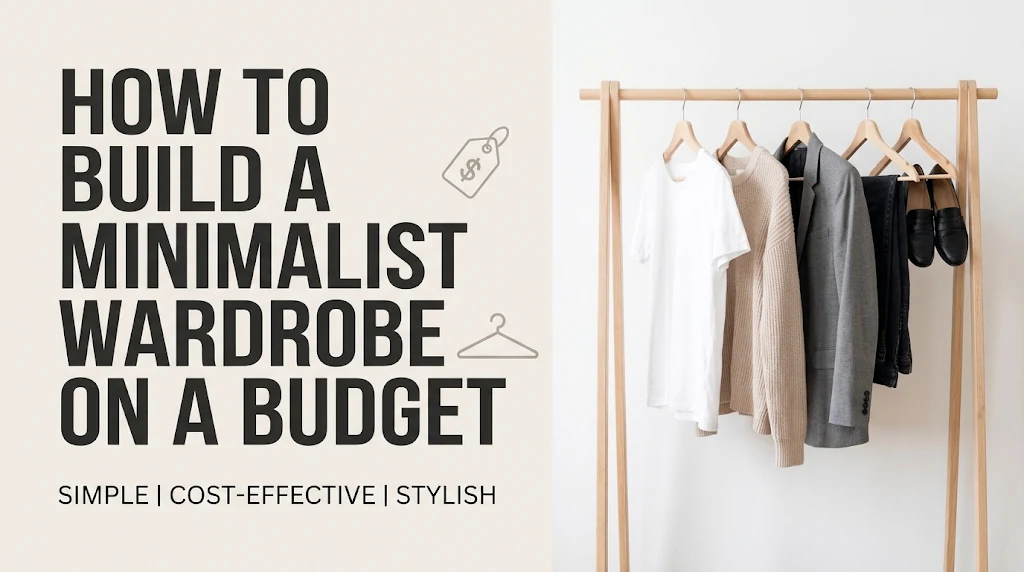
It is a paradox familiar to millions of women every morning: a closet bursting at the hinges with clothes, yet “nothing to wear.”
The average person wears roughly 20% of their wardrobe 80% of the time. The remaining 80% consists of impulse buys, ill-fitting fast fashion clearance finds, emotional purchases, and trend items that aged like milk. This cycle doesn’t just create physical chaos in your bedroom; it drains your mental energy and bleeds your bank account dry.
Enter the minimalist wardrobe (often referred to as a capsule wardrobe).
Building a minimalist wardrobe isn’t about stripping your life down to three gray t-shirts and a pair of jeans. It is about intentionally curating a collection of versatile, high-quality, and interchangeable garments that align perfectly with your actual lifestyle. Best of all, achieving sartorial elegance doesn’t require a designer budget.
In this comprehensive guide, you will learn step-by-step how to detox your closet, identify your signature style, shop strategically on a budget, and construct a 30-piece seasonal capsule wardrobe that yields dozens of unique outfits.
Section 1: The Psychology & Economics of the Minimalist Wardrobe
Before touching a single hanger, it is vital to understand why the traditional shopping cycle fails us and how minimalism flips the economic script in your favor.
The True Cost of Fast Fashion
Fast fashion relies on cheap synthetic fabrics, low-quality construction, and micro-trends designed to make your wardrobe feel obsolete within weeks. While buying a $15 polyester top feels like a bargain at the register, its true cost is revealed over time through the lens of Cost Per Wear (CPW).
Key Takeaway: A $15 trendy top worn twice before shrinking in the wash has a CPW of $7.50. A $100 high-quality wool blazer worn 100 times over three years has a CPW of $1.00. High quality on a budget means shopping for value, not just low price tags.
The Cognitive Freedom of Decision Minimization
Decision fatigue is a real psychological phenomenon. Every micro-decision you make throughout the day depletes your willpower and mental clarity. When your closet contains only items that fit comfortably, flatter your body, and match effortlessly with one another, morning dressing becomes an automated, stress-free routine.
[ Cluttered Closet ] ──► Decision Fatigue ──► Frustration & Impulse Spending
[ Minimalist Capsule ] ──► Streamlined Choices ──► Instant Confidence & Savings
Section 2: Phase 1 — The Radical Closet Detox
You cannot build a curated wardrobe until you know what you already own. Set aside 2 to 3 hours for a complete closet audit.
Step-by-Step Detox Framework
-
Empty Everything: Remove every item from your wardrobe, drawers, and under-bed storage. Lay it all on your bed.
-
Sort into 4 Distinct Piles:
-
Keep: Items you have worn in the last 6 months, fit perfectly, and are in excellent condition.
-
Alter/Repair: High-quality pieces that need minor tailoring, hem adjustments, or simple repairs.
-
Donate/Sell: Clothes in good condition that no longer fit your lifestyle, body shape, or personal aesthetic.
-
Recycle: Items that are stained, worn out, or damaged beyond repair (take these to textile recycling facilities).
-
Pro Tip: The Hanger Trick
Turn all the hangers in your closet backward (hook facing out). Whenever you wear an item, return it to the closet with the hanger facing forward. After six months, any hanger still facing backward holds a garment you don’t actually wear.
Section 3: Phase 2 — Defining Your Style DNA & Color Palette
A minimalist wardrobe fails when it looks like someone else’s Pinterest board instead of matching your real daily life. To avoid this, you must define your personal Style DNA.
1. Analyze Your Lifestyle Realities
Map out your typical week by percentage to ensure your wardrobe matches your activities:
| Activity Category | Time Allocation (%) | Required Wardrobe Style |
| Professional / Work | 40% | Smart Casual, Tailored Separates |
| Casual / Everyday | 30% | Comfortable Knits, Denim, Elevated Tees |
| Active / Loungewear | 15% | Functional Performance & Soft Basics |
| Social / Evening Out | 15% | Versatile Dresses, Statement Layering |
2. Establish Your Capsule Color Matrix
To make mixing and matching effortless, limit your core wardrobe to a strict 3-tier color matrix consisting of 6 to 9 shades maximum.
-
Base Neutrals (2–3 colors): Black, Navy, Charcoal, Camel, or Chocolate Brown. Used for trousers, blazers, and outerwear.
-
Supporting Neutrals (2–3 colors): White, Cream, Soft Gray, Beige, or Warm Ivory. Used for tops, knitwear, and tees.
-
Accent Colors (1–2 colors): Olive Green, Burgundy, Rust, Terracotta, Cobalt, or Dusty Rose. Used for scarves, statement tops, or accessories.
  [ Base Neutrals ]       +       [ Supporting Neutrals ]       +       [ Accent Colors ]
(Black / Camel / Navy)          (Cream / White / Soft Gray)           (Burgundy / Olive)
                                            │
                                            ▼
                           100% Interchangeable Outfits
Section 4: The 30-Piece Budget Capsule Framework
Here is a practical breakdown of a 30-piece capsule wardrobe suitable for Spring/Autumn transitions. By focusing on classic silhouettes, these 30 items generate over 75 unique outfit combinations.
+-------------------------------------------------------------------------+
|                  THE 30-PIECE CAPSULE BREAKDOWN                         |
+-------------------------------------------------------------------------+
|  [Tops - 9]        • 3 Neutral Crewneck Tees (White, Black, Gray)       |
|                    • 2 Crisp Button-Down Shirts (White, Light Blue)     |
|                    • 2 Lightweight Sweaters (Camel, Striped)            |
|                    • 2 Silk/Rayon Camisoles (Black, Cream)              |
+-------------------------------------------------------------------------+
|  [Bottoms - 6]     • 2 Pairs of Tailored Trousers (Black, Beige)        |
|                    • 2 Pairs of High-Quality Denim (Straight, Wide)    |
|                    • 1 Slip/Midi Skirt (Neutral or Subtle Pattern)      |
|                    • 1 Tailored Short or Casual Pant                    |
+-------------------------------------------------------------------------+
|  [Dresses - 3]     • 1 Classic Black Wrap/Midi Dress                    |
|                    • 1 Shirt Dress (Breathable Cotton/Linen)            |
|                    • 1 Knit Sweater Dress                               |
+-------------------------------------------------------------------------+
|  [Outerwear - 4]   • 1 Tailored Blazer (Structured Black or Check)       |
|                    • 1 Classic Trench Coat (Beige or Stone)             |
|                    • 1 Denim or Leather Jacket                          |
|                    • 1 Wool Blend Cardigan                              |
+-------------------------------------------------------------------------+
|  [Shoes - 4]       • 1 Pair of Clean White Leather Sneakers             |
|                    • 1 Pair of Neutral Leather Loafers/Flats            |
|                    • 1 Pair of Ankle Boots                              |
|                    • 1 Pair of Versatile Block Heels                    |
+-------------------------------------------------------------------------+
|  [Bags - 4]        • 1 Structured Tote Bag                              |
|                    • 1 Crossbody Bag                                    |
|                    • 1 Casual Canvas/Market Tote                        |
|                    • 1 Minimalist Evening Clutch                       |
+-------------------------------------------------------------------------+
Section 5: Strategic Shopping on a Shoestring Budget
Building a high-quality minimalist wardrobe on a tight budget requires changing where and how you shop.
1. Sourcing High Quality via Thrifting & Resale
Secondhand shopping is the single best way to acquire luxury and natural-fabric garments at fast-fashion prices.
-
Online Resale Platforms: Use search filters strategically on platforms like Poshmark, ThredUp, eBay, and Vestiaire Collective. Search by brand and fabric composition (e.g., “Silk shirt,” “100% Wool blazer,” “Cashmere sweater”) rather than vague style names.
-
Local Thrift & Consignment: Target secondhand shops located in affluent neighborhoods. They frequently receive donations of high-end, gently worn items.
2. Fabric Identification — The Ultimate Quality Gauge
Always check the inner care tag before buying. Synthetic materials like polyester, acrylic, and rayon break down quickly, pill easily, and trap body odors. Prioritize natural fibers, even when buying secondhand:
-
Cotton (100%): Breathable, durable, and easy to wash. Look for heavyweight cotton for tees and denims.
-
Wool & Cashmere: Unmatched insulation, structure, and longevity.
-
Linen: Ideal for warm weather, highly durable, and ages gracefully with washing.
-
Silk: Premium drape, temperature-regulating, and long-lasting when properly cared for.
Example Application:
Imagine you find two beige trenches:
Option A: Brand New Fast-Fashion Trench — $60, 100% Polyester lining, thin plastic buttons, single stitching.
Option B: Secondhand Vintage Trench — $45, 100% Heavy Cotton Gabardine, horn buttons, reinforced double stitching.
Verdict: Option B costs $15 less, will last decades longer, and drapes superiorly due to high-grade natural fibers.
Section 6: Common Pitfalls to Avoid
Even with the best intentions, it is easy to stumble when building a minimalist wardrobe. Watch out for these four common mistakes:
-
Buying for an “Idealized” Self: Don’t buy clothes for a lifestyle you wish you had. If you work from home, buying four business suits because they were on sale is a waste of your budget.
-
Mistaking “Boring” for “Minimalist”: A minimalist wardrobe does not mean wearing plain white tees and beige pants every single day. Texture (knits, leather, silk), silhouette (wide-leg, tailored, oversized), and subtle accents (jewelry, scarves) keep minimalism visually dynamic.
-
Ignoring Tailoring Costs: An inexpensive garment that fits poorly will look cheap. Allocate a small portion of your budget ($15–$30 per garment) for minor tailoring adjustments, such as hemming trousers or taking in a jacket waist. Tailoring elevates budget garments to look custom-made.
-
Neglecting Fabric Care: Minimalist wardrobes rely on fewer items being worn more often. Extend garment life by washing clothes in cold water, air-drying delicate knits, and investing in a fabric shaver to remove pilling.
Section 7: Frequently Asked Questions (FAQs)
FAQ 1: How many total items should be in a minimalist wardrobe?
There is no fixed rule, but a functional seasonal capsule typically ranges between 25 to 37 items (excluding underwear, sleepwear, and workout gear). This provides enough variety for daily wear without creating visual clutter or decision fatigue.
FAQ 2: How do I build a minimalist wardrobe if my weight fluctuates?
Focus on versatile, adaptable silhouettes rather than rigid tailoring. Invest in wrap dresses, elastic-back trousers, belted cardigans, oversized button-downs, and adjustable drawstrings. Choose fabrics with 2–5% elastane or spandex for comfortable stretch.
FAQ 3: Isn’t buying high-quality clothing more expensive up front?
While retail price tags for high-quality items can be higher, buying secondhand, thrifted, or end-of-season sales brings high-quality pieces down to fast-fashion prices. Additionally, because high-quality garments last significantly longer, your long-term clothing expenditure drops dramatically.
FAQ 4: How do I prevent my outfits from feeling repetitive?
Leverage the power of styling accessories and texture layering. Swapping sneakers for leather loafers, adding a structured belt, changing up gold/silver jewelry, or layering a collared shirt under a crewneck sweater completely transforms the look of core pieces without adding closet clutter.
Conclusion & Action Plan
Building a minimalist wardrobe on a budget isn’t about restriction—it is about liberating yourself from the cycle of endless consumption, cluttered closets, and wasted money. By focusing on fit, natural fabrics, neutral color harmony, and smart secondhand sourcing, you can cultivate an elevated signature style that makes getting dressed every morning a joy.
